The Hidden Cost of Building on Weak Foundations
Discover why strong foundations matter in AI SaaS development and how to avoid pitfalls by focusing on infrastructures first.
Introduction
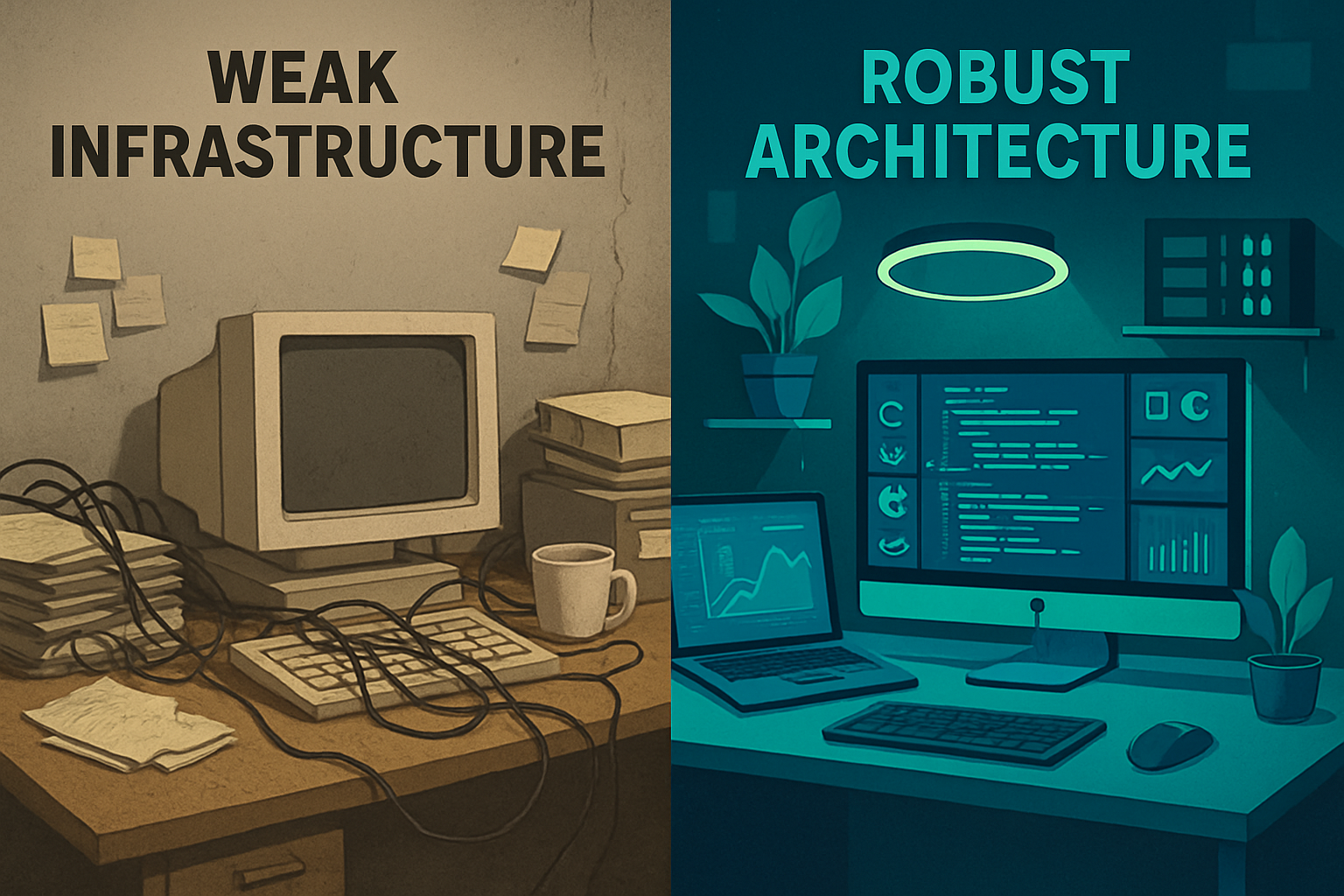
In the fast-paced world of AI SaaS, building on solid infrastructure is critical. Entrepreneurs can be tempted to accelerate development, overlooking foundational elements. But this can lead to costly repairs and setbacks down the line. A focus on robust infrastructure ensures longevity and scalability, offering a strategic edge over competitors.
In this post, we'll explore the hidden costs of neglecting foundational elements in AI SaaS development and provide actionable insights to de-risk your venture from the start.
The Real Dangers of Weak Foundations
Building on weak foundations might offer short-term gains, but it quickly inflates long-term costs. As an experienced builder of multiple startups, I've seen firsthand how decisions today impact future growth.
1. Technical Debt: The Silent Business Killer
Technical debt accumulates when foundational elements are rushed or ignored. While it’s tempting to cut corners to launch faster, this approach can lead to:
- Increased Maintenance Costs: Constantly patching issues drains resources and morale.
- Slower Feature Rollouts: With fragile architecture, even minor updates can be time-consuming.
2. Scalability Challenges
Your initial architecture sets the stage for future growth. Enterprise-grade scalability is crucial for handling increased user loads and data volume. Without it, your SaaS app risks:
- Performance Bottlenecks: Poor infrastructure can't handle heavy traffic, leading to downtime.
- Costly Downtime: Every minute of downtime means lost revenue and frustrated users.
Addressing Infrastructure Early
A proactive approach to infrastructure can transform potential pitfalls into competitive advantages. Here's how to build a foundation that scales with success:

3. Invest in Enterprise-Grade Infrastructure
Choosing the right tech stack can significantly impact your venture's capability to scale and pivot. An experienced CTO can guide you in:
- Selecting Proven Tech Stacks: Use battle-tested solutions that align with your long-term vision.
- Implementing Scalable Architectures: Design systems that grow seamlessly with your user base.
4. Regular Audits and Technical Due Diligence
Routine audits ensure your architecture remains robust and aligns with business goals. Consider:
- Pattern Recognition: Employing expertise from those who've built successful architectures before.
- Adapting to New Technologies: Staying ahead with emerging tech can prevent future obsolescence.
Case Study: The Cost of Ignoring Infrastructure
Reflecting on a past project, Enlyt Health, we faced initial setbacks due to rushed decisions. By refocusing on scalable architecture, we turned potential failures into a user-friendly, stable product.
- Result: Growth to a user base of 230,000+, demonstrating the power of building with foresight.
Actionable Steps to Strengthen Your Foundations
To avoid the pitfalls of weak infrastructure, prioritize these steps:
- Seek Expert Guidance: Partner with a seasoned builder who has navigated similar challenges.
- Focus on Resilience: Design systems that can handle failures gracefully.
- Iterate Intelligently: Implement feedback loops to adapt to changing needs.
Conclusion
In AI SaaS, a strong foundation isn’t a luxury; it's a necessity. Building your venture on future-ready infrastructure ensures it can withstand both scaling and pivoting as your business evolves.
By embracing a de-risked approach to architecture, you’re not just avoiding hidden costs but setting the stage for sustainable growth. Remember, you're not just paying for services—you're investing in decisions shaped by expertise and proven success in the field.
Let's build something resilient together, ensuring your SaaS venture is ready for whatever the future holds.
Ready to build something great?
Let's discuss how I can help with your AI strategy or technical leadership needs.
Start a Conversation